In this article:
- What Is an Inventory Management System?
- How Inventory Management Software Works
- Key Features of Inventory Management Software
- Benefits for Ecommerce Businesses
- Inventory Software for Amazon Sellers
- Inventory Software for Shopify Stores
- Manual Tracking vs Inventory Management Software
- When Do You Need Inventory Management Software?
- Choosing the Best Inventory Management Software
Modern commerce moves quickly. Products sell across multiple channels, customer expectations are immediate, and supply chains are increasingly complex. In this environment, understanding how dedicated stock management technology supports operational efficiency is essential for any growing business.
Inventory management software is a digital solution designed to track, organize, and optimize stock across warehouses, fulfillment centers, and sales platforms. It replaces manual spreadsheets and disconnected systems with centralized visibility, automation, and structured reporting. Instead of reacting to stockouts or overstock situations, businesses gain real-time clarity and strategic control over their operations.
At its core, the primary goal of inventory management is simple: maintain the right products, in the right quantities, at the right time — without tying up unnecessary capital.
What Is an Inventory Management System?
To understand the role of software, it's important to clarify the concept behind it. An inventory management system is a structured framework businesses use to monitor stock levels, track product movement, and manage replenishment cycles.
This framework defines how products are received, stored, sold, returned, and reordered — creating visibility and operational consistency across the entire supply chain.
This system includes:
- Stock tracking methods
- Reorder rules
- Warehouse organization
- Sales channel synchronization
- Reporting and analytics
Traditionally, these systems were manual. Today, they are powered by technology. A modern inventory management system integrates purchasing, warehousing, fulfillment, and sales data into a single structured process.
The system defines how stock is received, stored, sold, returned, and replenished. The software executes and automates that process.
How Inventory Management Software Works
To clarify what inventory management software does, we need to look at the workflow it supports.
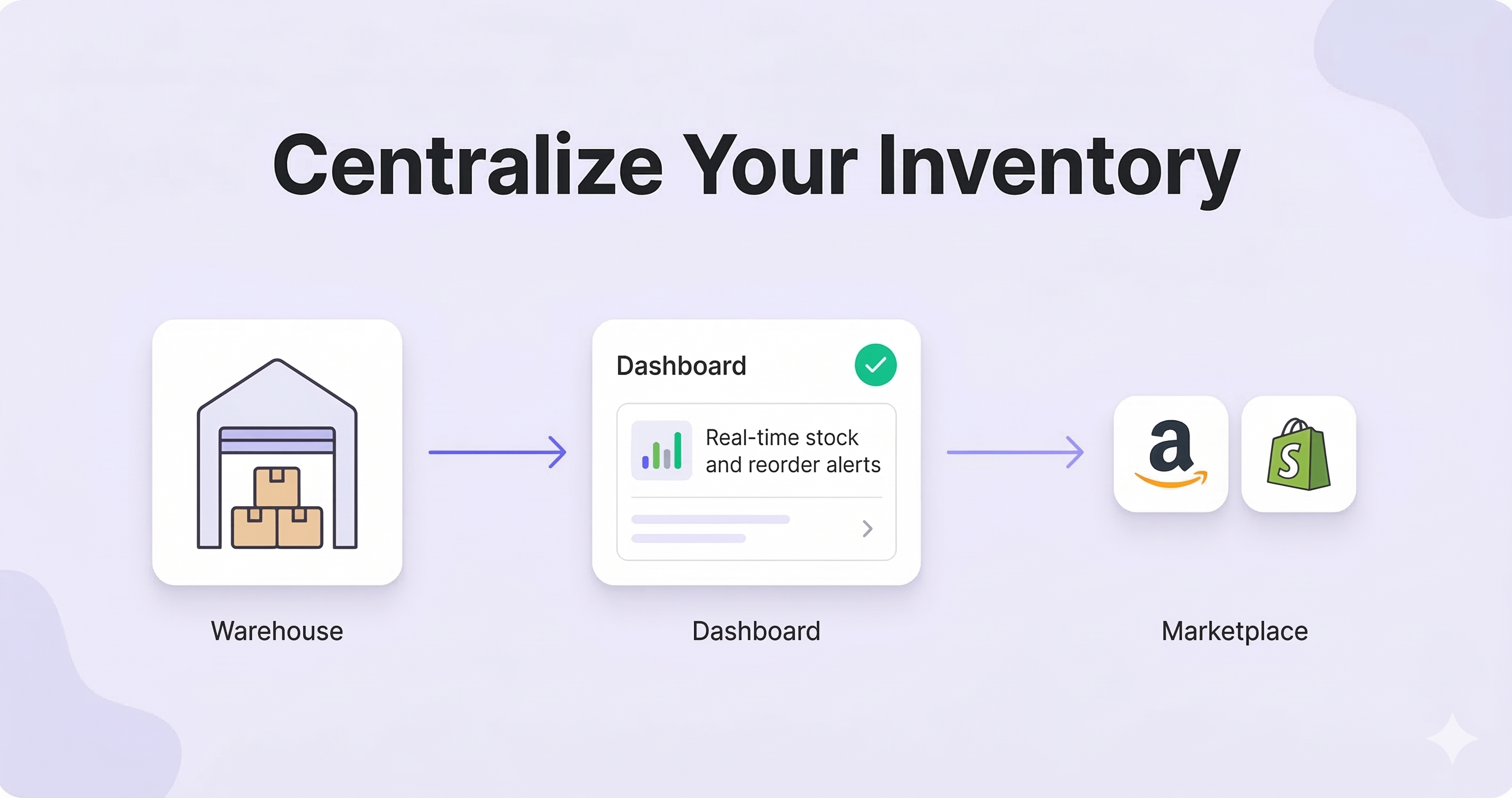
The software connects to your sales channels, warehouses, and suppliers. It collects stock data automatically and updates quantities whenever a sale, return, or restock occurs.
Here's how the process typically works:
- A product is sold through an online store or marketplace.
- The software instantly deducts the quantity from available stock.
- If stock levels drop below a predefined threshold, it triggers reorder alerts.
- Reports update in real time to reflect current availability.
Instead of manually reconciling sales and stock levels, the system synchronizes data automatically. This eliminates delays and reduces human error.
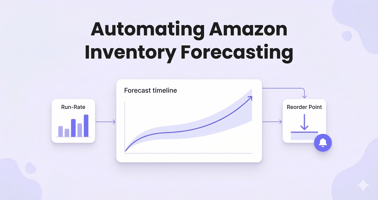
Advanced platforms also provide forecasting tools, demand planning insights, and supplier tracking. These capabilities turn raw operational data into actionable business intelligence.
Key Features of Inventory Management Software
A high-quality inventory management software platform includes several essential components:
- Real-Time Stock Tracking. Automatic updates across warehouses and sales channels prevent discrepancies.
- Multi-Location Management. Businesses operating multiple fulfillment centers can monitor each location independently while maintaining centralized oversight.
- Order and Fulfillment Coordination. The system aligns stock with orders, shipping status, and returns.
- Reporting and Forecasting. Built-in analytics provide insight into turnover rates, slow-moving products, and seasonal trends.
- Automation and Alerts. Smart reorder points prevent stockouts and overstock situations.
These capabilities transform disconnected inventory management tools into an integrated operational backbone.
Benefits for Ecommerce Businesses
For online brands, ecommerce inventory management is not optional — it is operational infrastructure.
The benefits include:
- Improved Cash Flow. Inventory is one of the largest expenses for ecommerce businesses. Effective tracking reduces excess purchasing and frees capital.
- Reduced Stockouts. Automated alerts ensure products remain available during high-demand periods.
- Lower Storage Costs. Optimized stock levels prevent unnecessary warehousing expenses.
- Scalability. As order volume increases, automation absorbs complexity without requiring additional manual oversight.
Following inventory management best practices ensures long-term efficiency. This includes maintaining accurate stock counts, auditing inventory regularly, and integrating forecasting with purchasing decisions. An effective solution protects profit margins and supports sustainable growth.
Inventory Software for Amazon Sellers
Amazon sellers face unique challenges. Sales velocity can shift rapidly, storage limits fluctuate, and fulfillment fees depend on stock levels.
Inventory software helps sellers:
- Track fulfillment center stock
- Monitor sell-through rates
- Plan restocking schedules
- Avoid long-term storage penalties
Real-time tracking ensures that stock aligns with demand. When combined with financial visibility, sellers gain precise margin control.
Inventory automation also supports advertising strategy. When sellers understand stock velocity, they can align campaigns with available quantities rather than risking overselling.
Inventory Software for Shopify Stores
Shopify merchants often sell across multiple channels — direct website, social platforms, marketplaces, and retail. Inventory software connects these touchpoints into one synchronized system. When a customer purchases from any channel, stock updates immediately across all platforms.
This prevents overselling and maintains customer trust. For growing brands, synchronization becomes increasingly important. As SKUs expand and order volume rises, manual tracking quickly becomes unsustainable. A centralized solution ensures visibility across every sales channel while maintaining operational consistency.
Manual Tracking vs Inventory Management Software
Many small businesses begin with spreadsheets. While workable at low volume, manual systems introduce significant risk.
Manual tracking often leads to:
- Delayed updates
- Human error
- Missed reorder timing
- Inconsistent reporting
In contrast, automated platforms maintain constant visibility and reduce operational friction. Spreadsheets require time and constant reconciliation. Software solutions streamline that workload and transform inventory into structured, reliable data.
Businesses seeking scalability should view automation not as an expense, but as an operational investment.
When Do You Need Inventory Management Software?
Businesses typically reach a turning point when complexity outpaces manual systems.
You likely need structured inventory management software when:
- You manage more than one sales channel
- You store products in multiple locations
- You experience frequent stockouts
- You struggle with demand forecasting
- You lack clear reporting
As order volume grows, the operational requirements increase. Automation becomes necessary to maintain efficiency and accuracy.
For businesses looking for a scalable stock management solution built for ecommerce operations, explore NeonPanel's inventory management platform to centralize tracking, forecasting, and reporting in one streamlined system. This solution centralizes tracking, forecasting, and reporting into one structured environment designed for modern online brands.
Choosing the Best Inventory Management Software
Selecting the right platform requires clarity on your operational needs.
If you are evaluating what is the best inventory management software, consider these factors:
- Integration Capability. Does it connect seamlessly with your sales platforms and fulfillment providers?
- Scalability. Can it handle growing SKU counts and increasing order volume?
- Automation Depth. Does it automate replenishment alerts and forecasting?
- Reporting Transparency. Does it provide real-time visibility into stock movement and performance?
The best inventory management software is not necessarily the most complex — it is the one aligned with your workflow and growth trajectory. A strong solution should simplify operations, improve visibility, and support strategic decision-making rather than add technical overhead.