
What is Landed Cost and Why It Matters in Business
Table of Contents
- What Is Landed Cost?
- How to Calculate Landed Cost
- Landed Cost vs. Total Landed Cost: What's the Difference?
- Why Landed Cost Matters for Supply Chain and Business Decisions
- Tools to Estimate Landed Cost
- Common Mistakes When Calculating Landed Cost
- How to Track Landed Costs Effectively
- How NeonPanel Automates Landed Cost Tracking
- Conclusion
What Is Landed Cost?
Landed cost is the total cost of a product once it has arrived at its destination. It goes beyond the supplier's invoice price to include every expense incurred along the way — from the moment goods leave the factory floor to the moment they reach your warehouse.
For e-commerce and importing businesses, understanding landed cost is foundational. Without it, you cannot know whether a product is truly profitable, and you cannot price it competitively without eroding your margins.
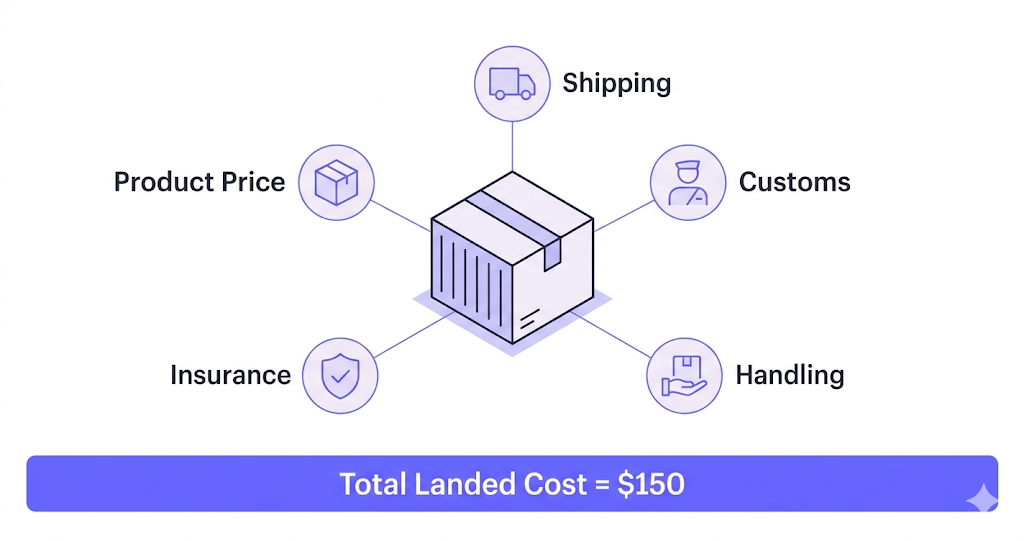
The key components of landed cost typically include:
- Product price — the cost paid to the supplier or manufacturer
- Shipping and freight — transportation from origin to destination
- Customs duties and import taxes — government-imposed charges on imported goods
- Insurance — protection against loss or damage during transit
- Handling fees — charges for loading, unloading, and processing
Together, these components give you the true cost of your inventory — information that is indispensable for accurate pricing, profitability analysis, and sound supply chain decisions.
How to Calculate Landed Cost
The basic formula is straightforward:
Landed Cost = Product Price + Shipping + Customs Duties + Insurance + Handling Fees
Here is a practical example:
| Expense Component | Amount |
|---|---|
| Product Price | $100 |
| Shipping | $20 |
| Customs Duties | $10 |
| Insurance | $5 |
| Handling Fees | $15 |
| Total Landed Cost | $150 |
In this case, the overall total for importing the goods is $150, which includes all key charges. That $150 — not the $100 supplier price — is what each unit truly costs your business.
Landed Cost vs. Total Landed Cost: What's the Difference?
These two terms are related but distinct, and conflating them leads to underestimated costs.
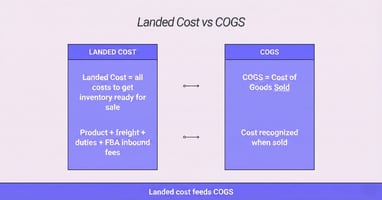
- Landed Cost — only includes the direct costs: product price, transportation, and taxes.
- Total Landed Cost — encompasses all associated costs, including indirect factors like warehousing, administrative fees, and other operating expenses.
The total landed cost provides a broader measure that is crucial for businesses to understand the full financial picture of their operations, especially when calculating overall profitability. Understanding both metrics helps businesses evaluate the complete financial impact of their products and make more informed decisions. It allows companies to optimise operations and allocate resources more effectively by identifying areas where savings can be made.
Why Landed Cost Matters for Supply Chain and Business Decisions
Knowing the landed cost is crucial for strategic decision-making. It allows businesses to determine the true value of their products, set accurate pricing, and calculate profitability more effectively.
Benefits of Knowing Your Landed Cost
- Accurate Pricing: Ensures that all expenses are accounted for, leading to fair and competitive product pricing.
- Profitability Insights: Helps businesses assess whether their margins are adequate after factoring in all charges.
- Supply Chain Optimisation: By calculating these expenses, businesses can identify opportunities for savings or cost reduction.
- Improved Financial Planning: With precise calculations, businesses can forecast more accurately and avoid surprises in their budget.
Understanding the full scope of expenses enables better decision-making, helping companies streamline operations, enhance margins, and make informed choices that drive long-term success.
Tools to Estimate Landed Cost
Several tools are available to assist businesses in calculating their landed cost efficiently. These systems automate the calculation and offer real-time data to enhance decision-making.
Examples of Tools
- Landed Cost Calculators: Many logistics providers, such as DHL and FedEx, offer online calculators that estimate all associated charges.
- ERP Software: Many companies integrate landed cost calculations into their enterprise resource planning (ERP) systems to streamline the process.
- Custom Software Solutions: Large businesses often use custom solutions tailored to their specific supply chain needs for accurate cost tracking.
These tools help businesses manage their landed costs more effectively by providing accurate, up-to-date information.
Common Mistakes When Calculating Landed Cost
Calculating landed cost can be complex, and many businesses make common errors. Avoiding these mistakes will help ensure more accurate calculations and better pricing strategies.
- Overlooking Indirect Costs: Many companies fail to factor in indirect expenses like handling and storage.
- Underestimating Duties and Taxes: Customs duties and taxes can vary by product and country, and miscalculating these fees can lead to significant discrepancies.
- Ignoring Risk Management Costs: Insurance and potential risks during transit should always be included in the total cost calculation.
- Neglecting Currency Exchange Rates: When importing goods from different countries, fluctuating exchange rates can affect the final cost, and this should be accounted for in your calculations.
By carefully considering all of these factors, businesses can avoid common pitfalls and ensure they are accurately assessing their financial commitments.
How to Track Landed Costs Effectively
Tracking landed costs is essential to keeping your business's finances in check. Using the right systems will make it easier to manage these costs efficiently.
Best Practices for Tracking
- Automate the Calculation: Use software that integrates with your systems to automate landed cost tracking.
- Utilise Dashboards: Create visual representations of your landed costs to quickly spot trends and areas where savings can be made.
- Review Regularly: Make sure to conduct periodic reviews to ensure the accuracy of your data and adjust your pricing accordingly.
Proper tracking helps maintain a clear picture of your financial situation and ensures that all associated charges are accounted for. This clarity enables better decision-making and improved financial health for the business.
How NeonPanel Automates Landed Cost Tracking
For multi-channel e-commerce sellers, landed cost tracking is rarely straightforward. Goods arrive in batches with different suppliers, shipping routes, duty rates, and currencies — and manually reconciling all of that against COGS is where expensive errors creep in.
NeonPanel solves this at the batch level. Each shipment receives a unique Batch ID, and all associated costs — freight, duties, insurance, handling fees — are allocated directly to that batch using a true FIFO engine. When a unit sells, the COGS calculation draws from the actual cost of that specific batch, not an average. The result is accurate profitability reporting at the SKU level, every time.
What NeonPanel delivers for landed cost:
- Landed cost allocation across freight, duties, insurance, and fees — per batch, per unit
- True FIFO COGS using actual batch costs, not averages
- Full cost drill-down for audit, investor due diligence, and financial close
- Retroactive recalculation — fix a data entry error today and all downstream COGS updates automatically
- Real-time sync of COGS entries and inventory journals to QuickBooks Online or Xero
NeonPanel is the unified inventory and finance platform built for multi-channel e-commerce sellers, combining inventory management, batch tracking, landed cost allocation, automated COGS, fee reconciliation, and real accounting integration into one platform.
Start Free — Get Accurate Profitability and Automated Accounting in Minutes
Conclusion
Understanding and accurately calculating landed cost is essential for any business involved in importing and transporting goods. This metric provides insights into the true expense of a product, helping businesses set competitive prices, optimise their supply chain, and maximise profitability. By tracking these costs and using the right tools, companies can gain a comprehensive understanding of their expenses and make more informed decisions.
To learn more about managing your e-commerce accounting, explore Accounting for E-commerce for better financial oversight. With accurate landed cost calculations, your business can stay competitive and maintain healthy margins in a fast-paced marketplace.
.png?height=200&name=Accounting%20Matters%20(EBITDA).png)