
Amazon inventory forecasting needs velocity, lead time, and true FIFO cost on one SKU row. Pair...
In this article
- What Is an Amazon Inventory Management Strategy?
- How AI Improves Amazon Inventory Management
- Using Data to Make Better Inventory Decisions
- Best Practices for Amazon Inventory Replenishment
- Multi-Channel Inventory Optimization
- Common Amazon Inventory Management Mistakes
- KPIs Every Amazon Seller Should Monitor
- How Technology Simplifies Amazon Inventory Management
- Conclusion
- FAQ
An Amazon inventory management strategy is how you decide what to buy, when to replenish, and how much safety stock to hold so products stay available without locking cash in excess inventory. For multi-channel sellers, that strategy has to connect sales velocity, lead times, FBA constraints, and financial outcomes — not just Seller Central snapshots.
This guide covers the core components of a durable Amazon inventory strategy, how AI and operational data improve replenishment, multi-channel stock optimization, common mistakes, and the KPIs worth monitoring as you scale.
What Is an Amazon Inventory Management Strategy?
It's a plan for tracking, replenishing, and optimizing inventory to meet customer demand while controlling costs. The goal is to maintain the right stock levels, preventing both stockouts and excess inventory.
Effective inventory management influences more than product availability. It affects storage fees, cash flow, order fulfillment, customer satisfaction, and overall business performance. Poor inventory planning can lead to lost sales, higher operational costs, and unnecessary capital tied up in unsold products.
The core components are:
- Demand forecasting to estimate future sales based on historical data and seasonal trends.
- Inventory visibility to monitor stock levels across fulfillment centers and sales channels.
- Reorder planning that accounts for supplier lead times and expected demand.
- Safety stock to reduce the risk of stockouts caused by unexpected sales spikes or shipping delays.
- Supplier coordination to ensure inventory arrives on time and in the right quantities.
For sellers using Fulfillment by Amazon (FBA), inventory planning should also align with an efficient Amazon warehouse strategy. Monitoring storage limits, replenishment timelines, and inventory turnover helps minimize long-term storage fees while ensuring products remain available for customers. This is the operational core of any Amazon business strategy: without it, growth in sales volume just adds storage risk.
How AI Improves Amazon Inventory Management
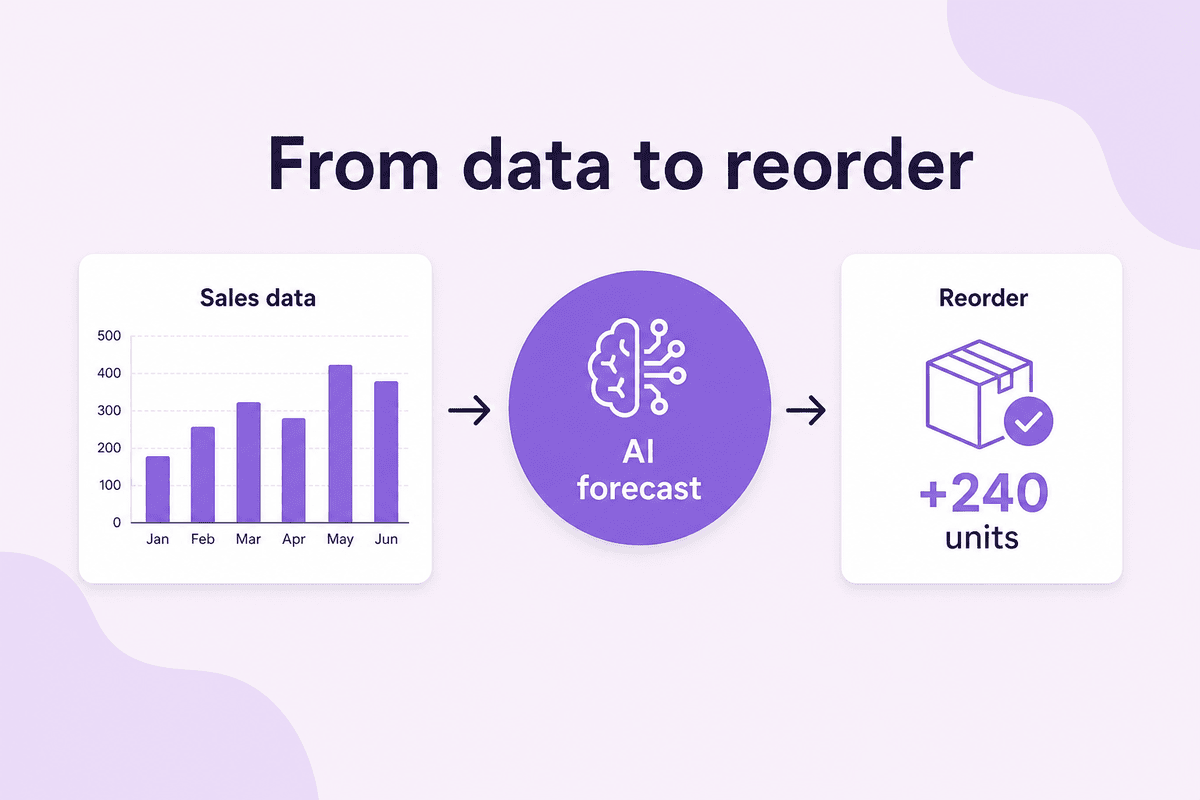
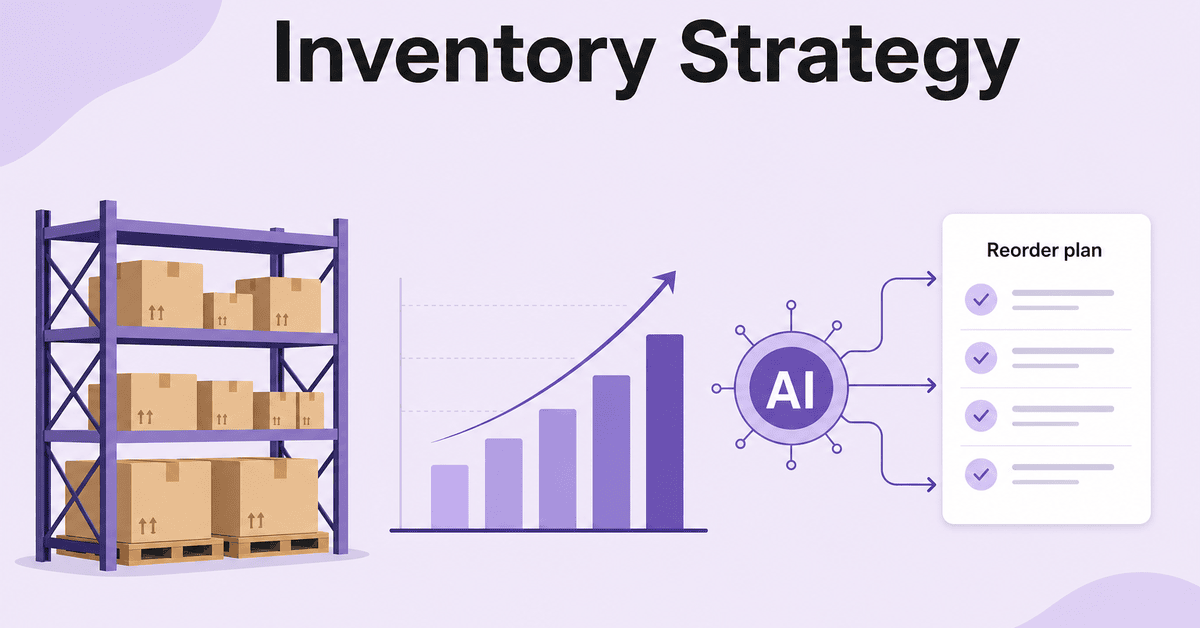
Artificial intelligence is transforming the way sellers manage inventory by replacing manual estimates with data-driven predictions. An effective Amazon AI strategy enables businesses to forecast demand more accurately, identify inventory risks earlier, and automate routine planning tasks.
AI analyzes historical sales, seasonal patterns, promotions, lead times, and customer purchasing behavior to recommend optimal inventory levels. Instead of reacting to stock shortages or excess inventory, sellers can make proactive decisions based on predictive insights.
| Traditional Inventory Planning | AI-Driven Inventory Management |
|---|---|
| Relies on manual forecasts | Uses predictive demand forecasting |
| Reacts to inventory issues | Identifies risks before they occur |
| Requires frequent spreadsheet updates | Automates inventory analysis |
| Limited visibility into trends | Detects patterns across large datasets |
| Slower decision-making | Supports real-time inventory planning |
As part of a broader Amazon innovation strategy, AI also helps identify slow-moving products, recommend replenishment timing, and improve inventory allocation across fulfillment locations. By reducing manual work and improving forecast accuracy, businesses can maintain healthier stock levels while lowering operational costs.
Using Data to Make Better Inventory Decisions
Successful inventory planning depends on accurate, up-to-date information rather than assumptions. An effective Amazon data strategy enables sellers to identify demand patterns, monitor inventory performance, and make informed replenishment decisions before issues affect sales.
Some of the most valuable metrics include sales trends, inventory turnover, sell-through rate, supplier lead times, stockout frequency, and seasonal demand. Reviewing these indicators regularly helps businesses adjust purchasing decisions, optimize stock levels, and improve cash flow.
Financial data is equally important. Inventory decisions should be aligned with profitability, storage costs, and purchasing budgets instead of relying only on sales volume. Integrating inventory data with Amazon Accounting Software gives finance and operations teams a more complete view of business performance, making it easier to evaluate inventory investments, forecast expenses, and support long-term planning.
When operational and financial data work together, businesses can respond faster to changing demand and make more confident inventory decisions.
Best Practices for Amazon Inventory Replenishment
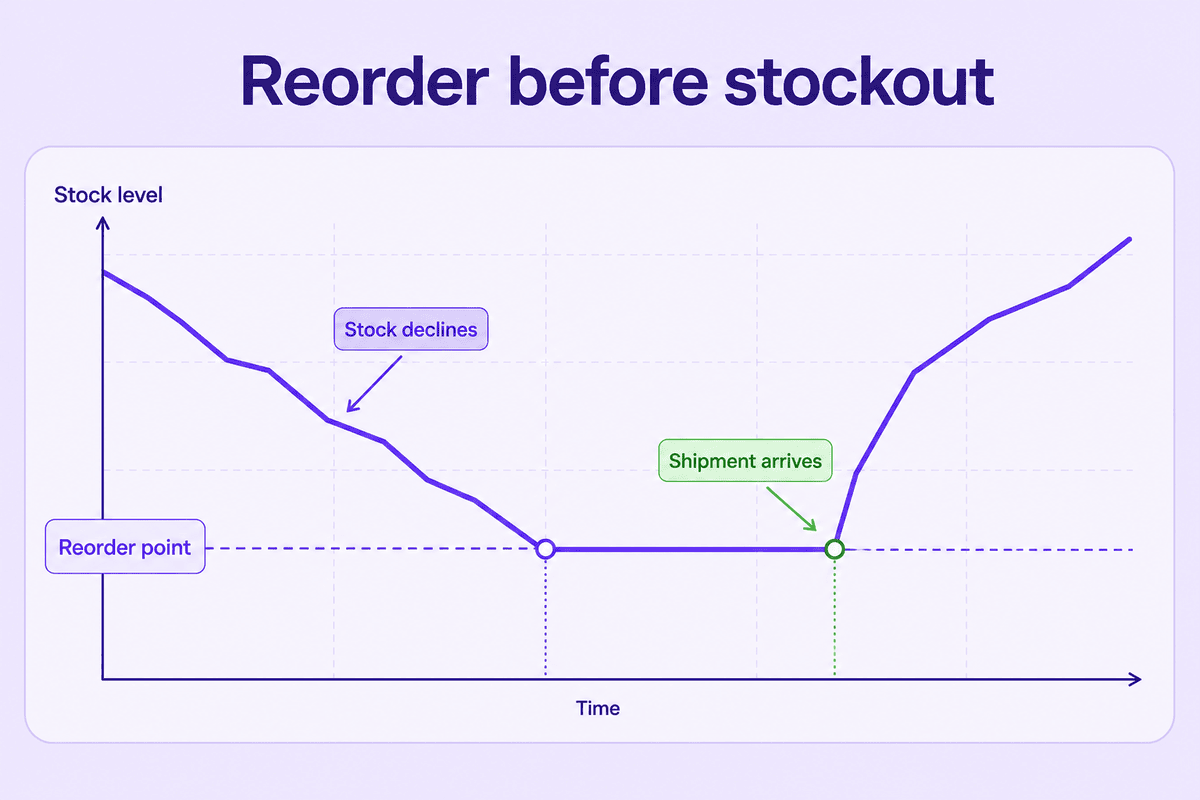
A successful Amazon business inventory replenishment strategy ensures products are restocked before inventory reaches critical levels without creating unnecessary overstock. The objective is to maintain product availability while optimizing storage costs and cash flow. This process sits at the core of any long-term Amazon FBA growth strategy, since restock timing directly affects Buy Box eligibility and organic ranking.
To improve replenishment planning, follow these best practices:
- Forecast demand using historical sales data and seasonal trends.
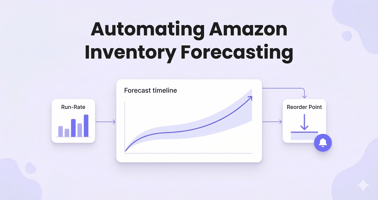
- Set reorder points based on supplier lead times and expected sales volume.
- Maintain safety stock for high-demand products to reduce the risk of stockouts.
- Review inventory performance regularly and adjust replenishment plans as demand changes.
- Monitor FBA storage limits and avoid long-term storage fees by replenishing inventory in smaller, more frequent shipments.
- Build strong relationships with suppliers to improve delivery reliability and reduce lead time variability.
Inventory replenishment should be an ongoing process rather than a fixed schedule. Regularly reviewing inventory data allows businesses to respond quickly to changing customer demand, improve product availability, and reduce unnecessary inventory carrying costs.
Multi-Channel Inventory Optimization
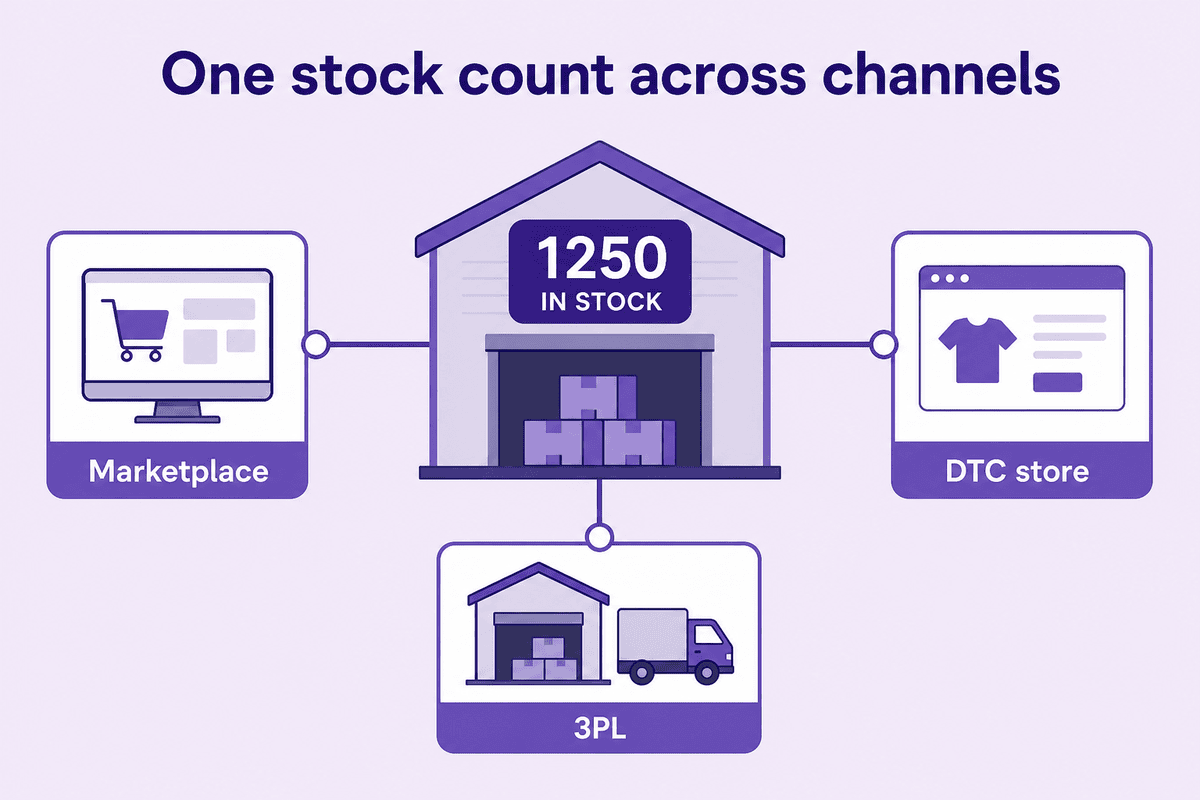
As businesses expand beyond a single marketplace, inventory management becomes significantly more complex. An effective Amazon multi-channel selling strategy ensures that stock levels remain accurate across every sales channel, reducing the risk of overselling, stockouts, and fulfillment delays. A well-executed Amazon business stock replenishment strategy accounts for lead times across every channel, not just Amazon's own fulfillment network.
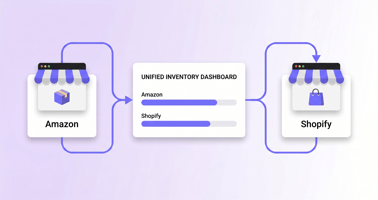
Whether products are sold through Amazon, a branded online store, or other marketplaces, inventory should be managed from a centralized system. This provides real-time visibility into available stock and allows updates to be synchronized automatically whenever a sale occurs.
A strong Amazon ecommerce strategy also includes consistent inventory tracking across all fulfillment methods. Businesses that combine FBA with their own warehouse or third-party logistics providers need accurate inventory synchronization to maintain a seamless customer experience.
By centralizing inventory data, sellers can improve order accuracy, respond more quickly to demand changes, and scale their operations without increasing manual work or relying on disconnected inventory records.
Common Amazon Inventory Management Mistakes
Even the best products can underperform if inventory is managed poorly. A well-planned Amazon seller growth strategy should include regular inventory reviews to prevent costly mistakes that affect sales, cash flow, and customer satisfaction.
Common inventory management mistakes include:
- Running out of stock because demand was underestimated.
- Ordering excessive inventory that leads to high storage fees and tied-up capital.
- Relying on manual spreadsheets instead of real-time inventory data.
- Ignoring seasonal demand and sales trends when planning replenishment.
- Failing to account for supplier lead times and shipping delays.
- Tracking inventory separately across multiple sales channels, resulting in inaccurate stock levels.
Most of these issues can be avoided by monitoring inventory performance consistently and adjusting purchasing decisions based on reliable data. As a business grows, proactive inventory management becomes increasingly important for maintaining product availability, controlling costs, and supporting sustainable growth.
KPIs Every Amazon Seller Should Monitor
Tracking the right performance metrics is essential for building a successful Amazon growth strategy. Key performance indicators (KPIs) help sellers understand how efficiently inventory is being managed and highlight opportunities to improve forecasting, replenishment, and profitability.
| KPI | Why It Matters |
|---|---|
| Inventory Turnover | Measures how quickly inventory is sold and replaced. |
| Sell-Through Rate | Shows how much inventory is sold within a specific period. |
| Stockout Rate | Indicates how often products become unavailable. |
| Days of Inventory on Hand | Estimates how long current inventory will last. |
| Forecast Accuracy | Compares expected demand with actual sales. |
| Excess Inventory | Identifies slow-moving stock that increases storage costs. |
Monitoring these metrics regularly allows sellers to identify trends before they become costly problems. Rather than reacting to inventory shortages or excess stock, businesses can make proactive decisions that improve cash flow, maintain product availability, and support long-term operational efficiency.
How Technology Simplifies Amazon Inventory Management
Technology plays a central role in any modern Amazon digital strategy. Instead of relying on spreadsheets and manual updates, businesses can use connected platforms to monitor inventory, forecast demand, and synchronize data across sales channels in real time.
Using dedicated Amazon Inventory Management Software helps automate stock tracking, replenishment planning, and inventory synchronization, reducing the risk of stockouts and overstocking. When integrated with Amazon Accounting Software, inventory and financial data work together, giving businesses greater visibility into costs, profitability, and cash flow.
For companies selling across multiple channels, NeonPanel brings finance and operations together in a single platform. By working from live operational data instead of manually reconciling exports from different systems, teams can make faster inventory decisions, improve reporting accuracy, and respond more quickly to changes in demand.
As operations become more complex, connected technology reduces manual work, improves data accuracy, and provides the visibility needed to scale inventory management with confidence.
Conclusion
An effective Amazon inventory management strategy is built on more than maintaining stock levels. It combines accurate forecasting, data-driven decision-making, timely replenishment, and the right technology to ensure products are available when customers need them while keeping costs under control.
As businesses grow across multiple products and sales channels, inventory management becomes increasingly complex. By monitoring key performance metrics, automating routine processes, and using connected operational and financial data, sellers can reduce stockouts, avoid excess inventory, and improve overall profitability.
The most successful Amazon businesses treat inventory management as an ongoing process rather than a one-time task. Regular optimization, supported by reliable data and scalable systems, helps businesses respond to changing demand, improve operational efficiency, and build a foundation for sustainable long-term growth.
Want inventory, COGS, and replenishment on one ledger? Explore NeonPanel Inventory Management or start free.
Further reading: Amazon Inventory Forecasting Guide · Stockout Prediction & Automated Replenishment · How to Properly Manage Inventory
FAQ
⌃ What are some inventory management strategies?
Demand forecasting, inventory visibility, reorder planning, safety stock, and supplier coordination. Forecasting predicts sales from history and seasonality. Visibility tracks stock across every fulfillment center and channel. Reorder planning sets purchase timing from lead times. Safety stock covers demand spikes. Supplier coordination keeps deliveries on time.
⌃ What happens if I keep too much inventory in Amazon FBA?
Cash sits in unsold units, and Amazon charges long-term storage fees once stock ages. Track turnover and sell-through rate to catch it early and liquidate before fees add up.
⌃ Which inventory metrics should be monitored most closely?
Inventory turnover, sell-through rate, stockout rate, days of inventory on hand, forecast accuracy, excess inventory.